Over 3,400 students observed Orion, recorded their estimate of sky glow, and shared results on the PHM spreadsheet. Thank you, teachers, for insuring their efforts contributed to PHM's overall success. We compiled the observations and distributed maps of the results and supporting questions to each 3-8 teacher. To see what's happening at individual PHM schools, see the district map at /phm.html. More LTBN news, events, satellite predictions, and website additions are at /whatsnew.html. The 3D model of results will be visiting each PHM school per the following schedule: October 5-9 Prairie Vista |
Key Documents
Handout with analysis in 4 PDF files delivered to each 3-8 teacher:
Page 1 for students, (or version for teachers)
Page 2 for students, (or same version for teachers)
Page 3 for students, (or version for teachers)
Page 4 for students, (or version for teachers)
Thank you for guiding your students as they explore dark sky issues. After a visit to the PHM planetarium, students in grades 3-8 will gather data both with their eyes and with instruments to quantify the sky glow of our local sky relative to a theoretically pristine sky. We want to measure the brightness of the night sky within our school district to determine how much has already been lost. While all grade levels will observe the constellation Orion, a team of students from each school will have added responsibilities as they correlate the sky glow observed by the naked eye with sky glow measured by the meter.
Why Should I Care? As stewards of the night, we are all responsible for the energy and money, natural resources, animal habitats, and human well-being that are at risk.
At the Planetarium
As part of the regular visit to the planetarium, over 6,000 students in grades 3-8 will attend an interactive program. Under the dome they will experience three side effects (glare, light trespass, and sky glow) from an unshielded light; try solutions that they propose; and practice the outdoor experiment. Terri Mellor of Elm Road compiled a 9-slide PowerPoint presentation that prepares students for the visit. Teachers are welcome to use her Summary of Outdoor Lighting Issues before or after a visit to the planetarium.
Under the Stars
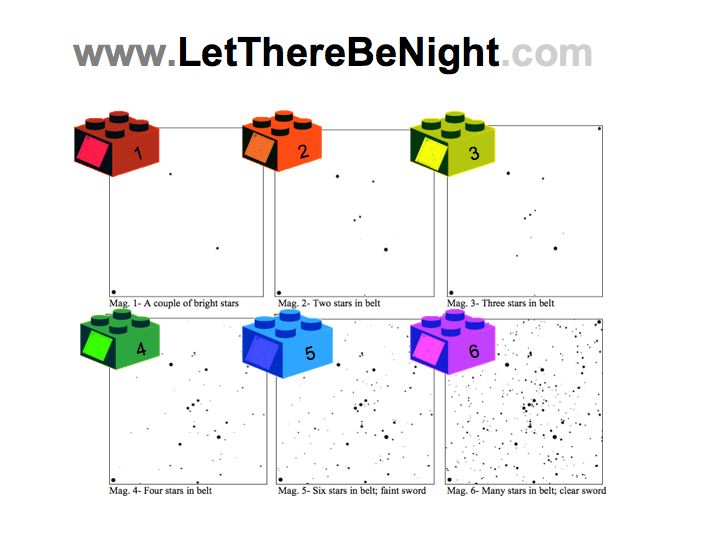
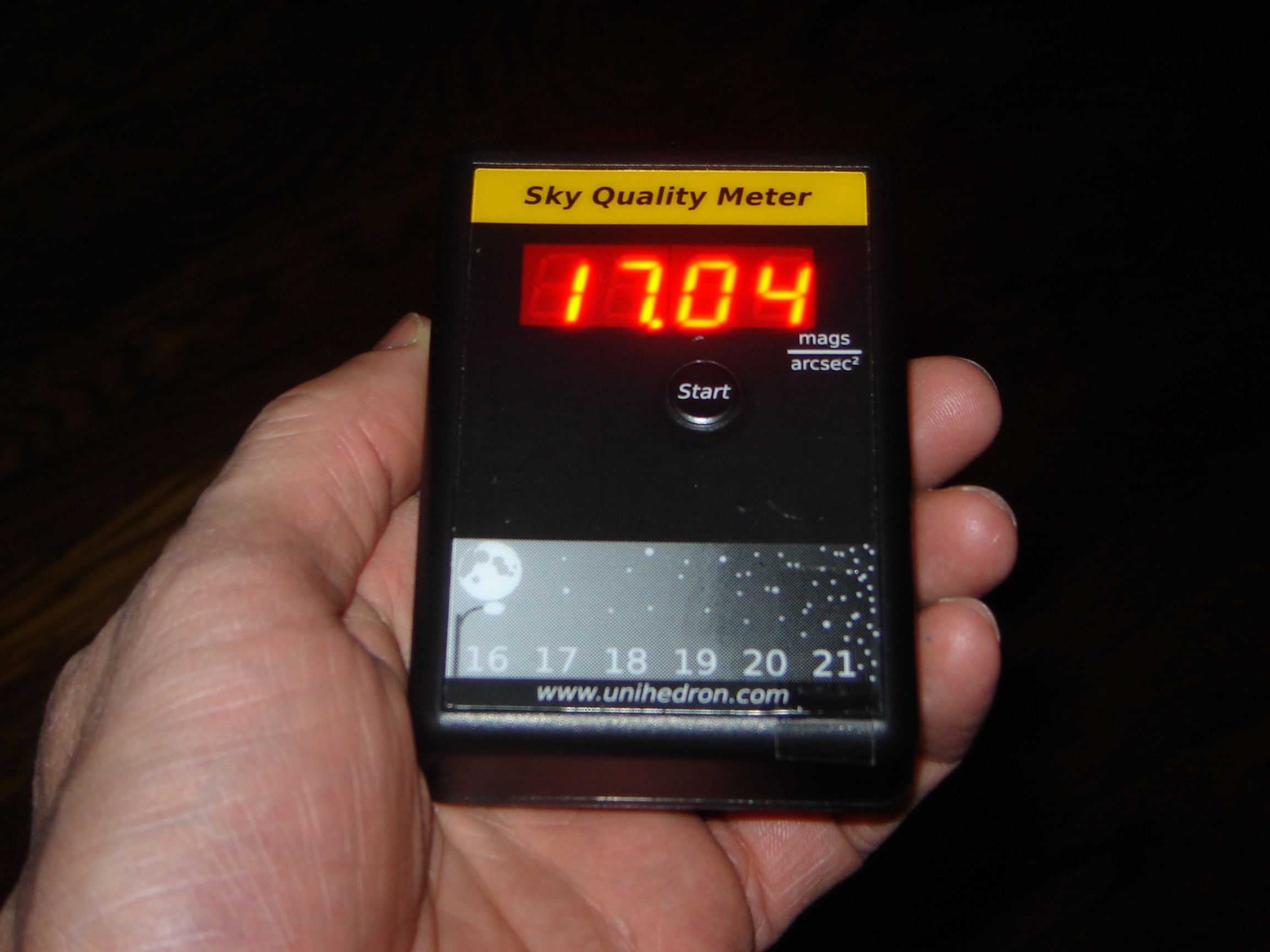 With guidance from the National Optical Astronomy Observatory (NOAO), all students in grades 3-8 will quantify the limiting magnitude of the stars by observing Orion from home at night. They will then compare their backyard observations of Orion with six star charts that having increasing numbers of visible stars. Small student teams from each of 14 schools will concurrently quantify sky glow throughout the district using hand-held Sky Quality Meters (SQMs).
Let There Be Night relates directly to the scientific method. The question we are asking: "How much of the night sky have we already lost?" Experimental controls are considered. Observations will coincide with the New Moon so that the moon does not influence the brightness. Observations will occur after astronomical twilight (when the sun is 18 degrees below the horizon) so that the sun does not contribute light to the night sky. The teams with the SQMs will always observe from the same locations on school grounds to insure continuity and reproducibility. The main variable in quantifying sky glow across our community is location. For the naked eye observations, over 6,000 students observing from home will be spread across 105 square miles of urban, suburban, and rural areas. The digital readings will come from the fourteen school sites.
Society & Technology: When does our society need outdoor lighting, and how do we prioritze the trade-offs of lighting technology?
In the Classroom
Each PHM teacher has received a free Let There Be Night DVD, courtesy of the PHM Educational Foundation and Jordan Toyota. Multiple resources on the DVD complement the planetarium visit, allowing teachers to pick age-appropriate chapters or activities for their respective classes. Teachers, please view these contents and intersperse age-appropriate resources in your classroom with your regular curriculum.
In the last two weeks of March 2009, each student will observe the constellation Orion with the unaided eye. Each night the students will compare their view with six star charts and record the corresponding limiting magnitude on a Student Recording Form.
 In the classroom, each teacher will keep a running tally of the students' observations from the night before. At the end of March, the students will enter their average value on a map that shows their school's boudaries.
Each teacher will have a Let There Be Night DVD, which will have chapters of dark sky content for their consideration. Better outcomes are likely if each teacher peruses the DVD and then modifies the material to suit his or her (and the class') needs. Please note that Disc #2 has several folders of valuable content that can be opened from a computer, beyond the five presentations that appear on the menu of a DVD player. If you are unsure how to access those files, see the illustrated instructions for opening Disc 2. Most of those files are also available on the DVD web page.
Teachers will guide the students in answering key questions:
- Why did we do this experiment? What were we trying to measure?
- What do you believe an ideal night sky should look like?
- What happens to the night sky if there is a lot of artificial outdoor lighting?
- In this experiment, what are the variables and controls?
- How do you explain the difference in the sky glow reported across different parts of the school district?
- By how much is our modern sky brighter than a natural sky, which would have a limiting magnitude chart that approaches 7, or an SQM reading of about 21.6?
- What is at risk from light pollution?
- How do we prioritize the tradeoffs of outdoor lighting technology with the benefits?
- What are possible solutions to glare, light trespass, and sky glow?
- Should we as a community change our impact on the night sky, and if so, what should we do?
Hear the Podcast: Let There Be Night is featured on the "Gosh Dim It All!" podcast, which was broadcast by the New Media Working Group of the International Year of Astronomy 2009. You can also find it and daily astronomy podcasts at 365 Days of Astronomy. Scroll down to (or find in the Archives) the podcast for Sunday, January 18, 2009.
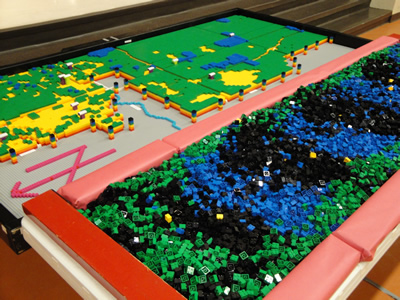
A Student Leadership Team (below) representing the 14 schools will build a model of the results out of LEGO blocks and present their overall findings and suggest action, if any, to the PHM School Board on May 11, 2009.
 The proposed student experiment has the support of the PHM Administration, PHM school principals, and the PHM School Board of Trustees. However,the motivation and inspiration of the teacher in the classroom are critical for the community's collective success.
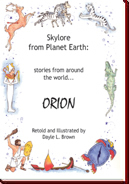
Recommended Reading: Sky Lore from Planet Earth: stories from around the world...Orion. Indiana author/illustrator Dayle Brown shares the lore of Orion from multiple cultures in both hemispheres.
Links:
- Four Key Documents for PHM Teachers
- Instructions for Teachers
- Six Magnitude Charts against which students will compare their backyard view of Orion.
- Student Recording Form on which students will record each night the number of the Magnitude Chart that matches their night sky.
- Note: During each school day, teachers will record the Magnitude Chart Numbers reported by their students during their March 14-28 observations. The spreadsheet will be in a shared folder that the teacher can access from his/her computer. Click for a draft copy of the title bar.
- Magnitudes lesson plan
- Six star charts with colored LEGO blocks in the corners.
- Globe at Night
Orion star count resources support LTBN and 2009 International Year of Astronomy
- I Touch Map
Easily find latitude and longitude to four decimal points for your viewing site.
- Earth Hour encourages businesses, governments, and residents to turn off lights March 28, 8:30-9:30 PM; (see the Earth Hour web page for families and teachers)
- Teacher activity packet and family activity packet (see Globe at Night and NOAO documents on DVD Disc #2)
- Galileo's Vision
See the key observations that convinced Galileo that the old model no longer worked.
- List of DVD contents. See the illustrated instructions for opening Disc 2 at dvd-open.html.
- Ideas for student-directed projects
General ideas for student action (from Night Vision)
- Ideas for local investigations
Specific ideas for student action (e.g., for academic fairs) related to the Michiana area
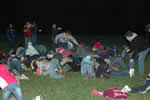 Activity: Turtle Hatch (The Night You Hatched)
Demonstration shows the survival challenges of turtles (simulated by large group of kids) hatching on a beach at night. Ask your school's Student Leadership Team to partner with you for this fun demonstration.
- Activity: Globe at Night
Students use a starfield of Orion (drilled into a stack of paper plates) to help students find and count the stars of Orion for Globe at Night.
- Activity: Heavens Above
Students draw their impression of night sky highlights to show what's at risk of being lost because of light pollution.
- Activity: Maglite® Demo
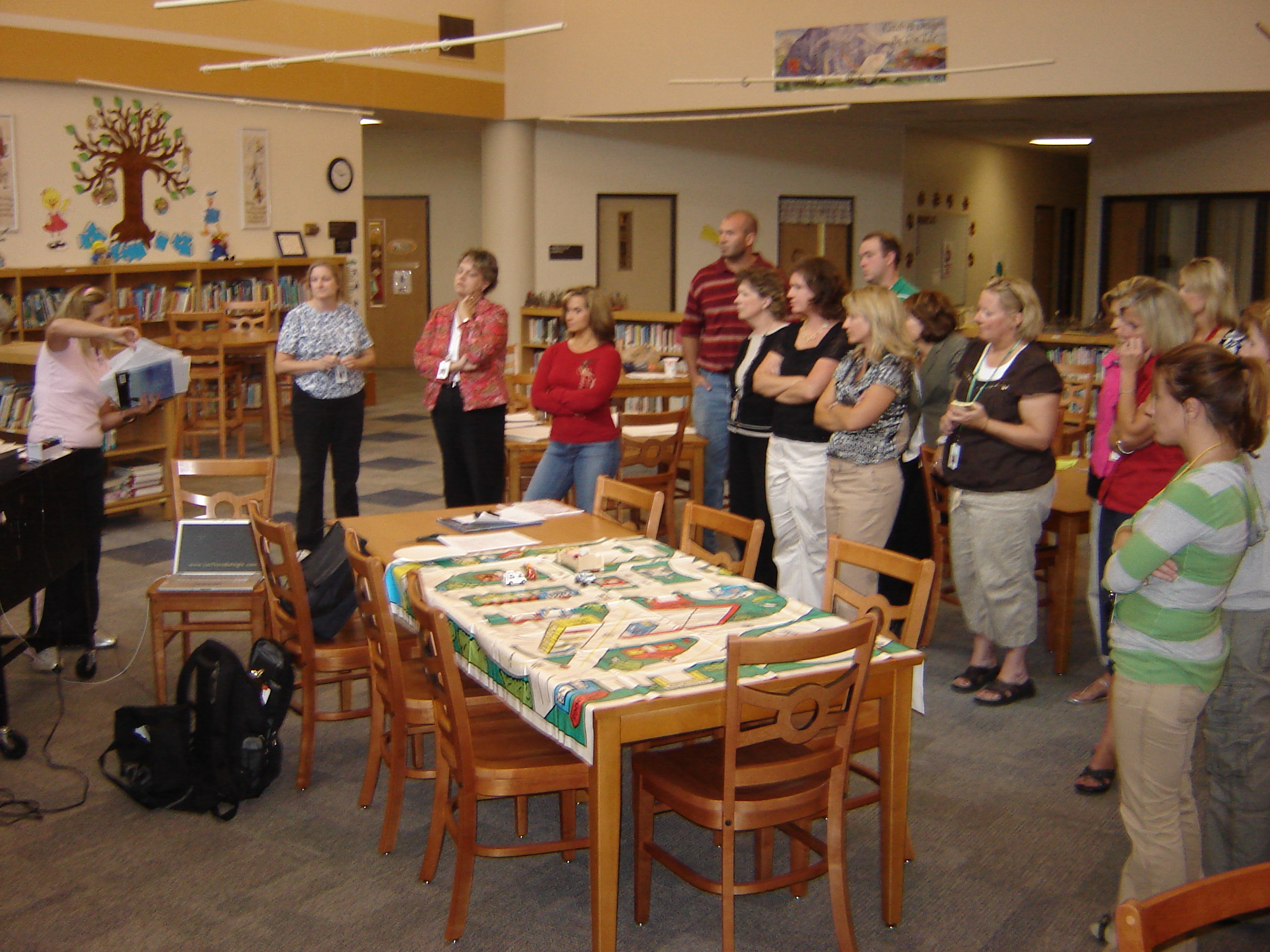
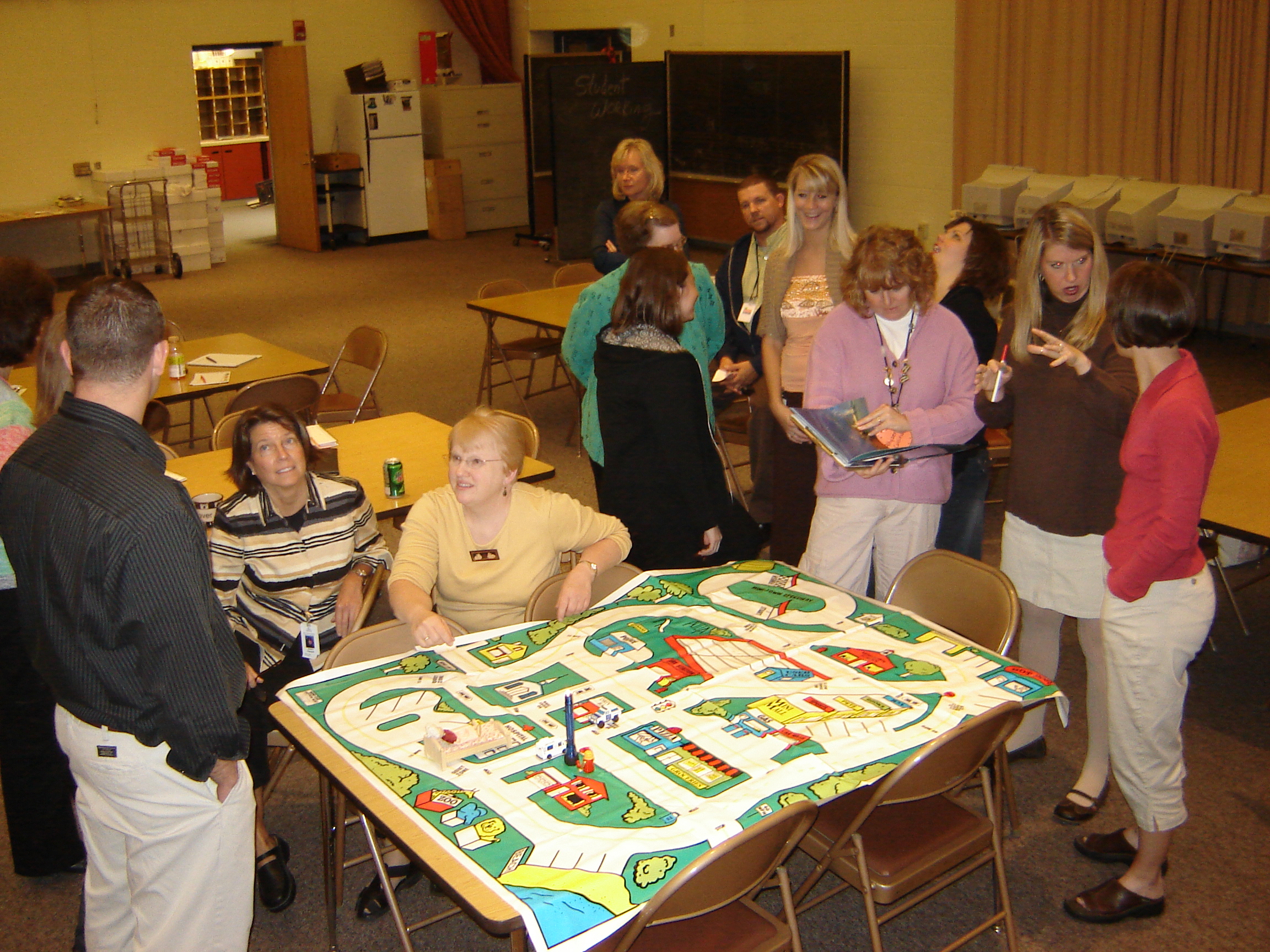
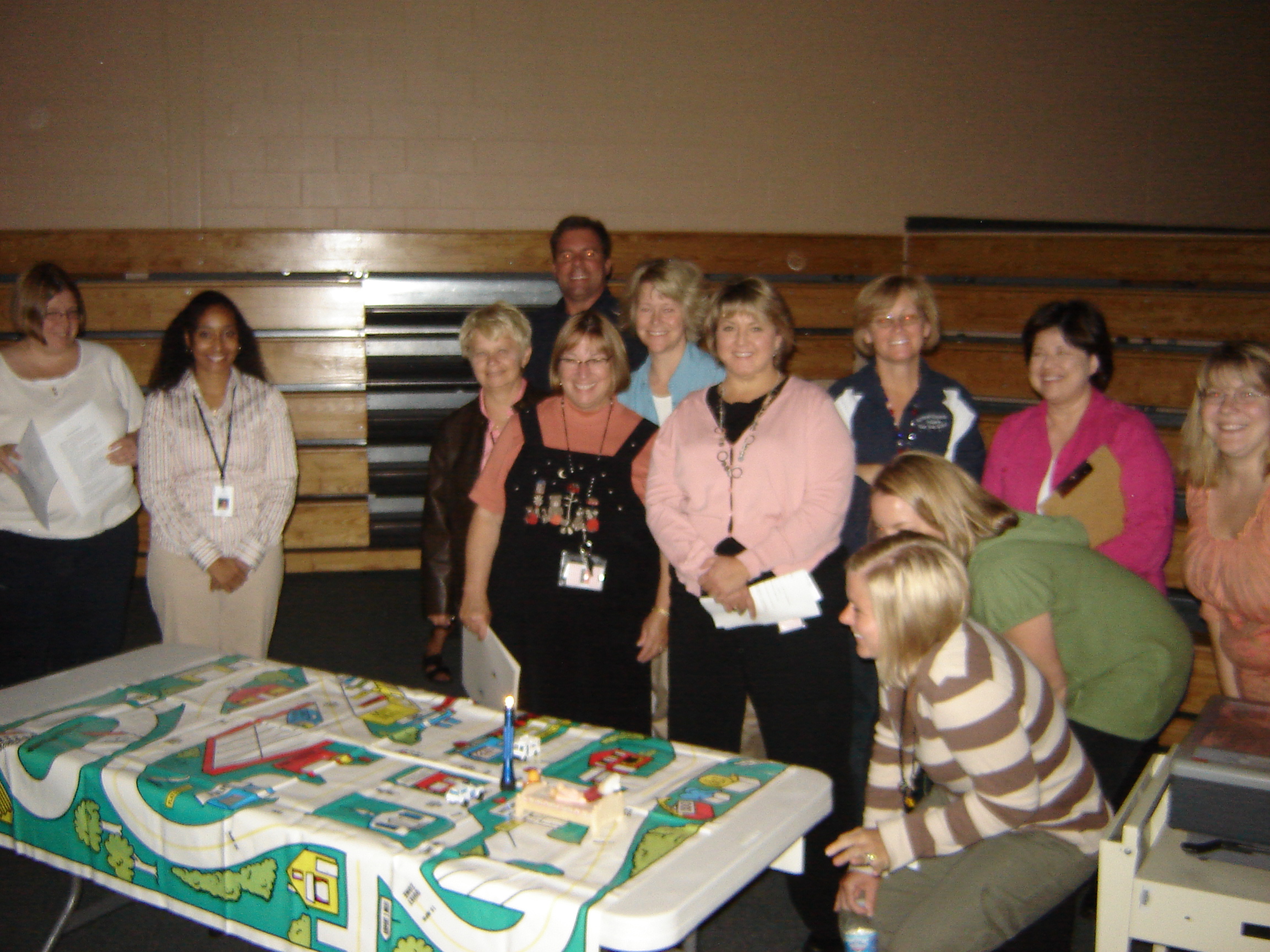
Students use toy cars, dolls, and a Maglite flashlight on a town mat to show how common lights create glare, light trespass, and sky glow, all of which can be lessened with simple shields around the lights
- Activity: The Good, the Bad, the Ugly
Students critique light designs and describe which light fixtures contribute to light pollution and which are night friendly.
- Activity: LEGO® Block Model
Using data gathered across the school district, the Student Leadership Teams will make a model out of LEGO® blocks to convey visually how much of the night sky has already been lost.
- Tools for Teachers
The International Dark-Sky Association (IDA) offers a collection of tools to assist teachers, with activities, lesson plans, learning resources, brochures, and project ideas.
- Globe at Night bserving forms, teacher activity packet, and family activity packet (see Globe at Night and NOAO documents on DVD Disc #2)
- PHM Planetarium Clear Sky Clock
Weather prediction for PHM area confirms good viewing times
- Astronomical Twilight
Calendar shows when the sun has set far enough (astronomical twilight) so that sky is at its darkest
- PHM Planetarium & Air/Space Museum
Before or after your visit, explore online some of the national treasures and exhibits on display in the PHM Planetarium
- Timeline of events suggests dates for Teacher In-Service, Quantifying Light Pollution, Data Analysis, and School Board Meeting;
- Standards with which Let There Be Night aligns:
- Orion star chart with magnitudes detailed. The numbers are to one decimel point, with the dot omitted so that it isn't confused with a faint star. For example, a star with 16 next to it has an apparent magnitude of 1.6.
 Observing Highlights & Sky Chart
See what's hapening in the night sky this week
- Spaceweather
Current happenings and photographs of astronomy stuff you can see, like aurorae, comets, noctilucent clouds, and sunspots
- Siemens We Can Change the World Challenge offers opportunity for small student teams.
- Local student projects:
- Sorry Starry Night compares sky before and after retail development
- Students investigate lighting issues and share findings with classmates
- Dark Sky Team compares nightly SQM values at astronomical twilight (coming soon)
Tools for Teachers: The
International Dark-Sky Association (IDA) offers a collection of tools to assist teachers, with activities, lesson plans, learning resources, brochures, and project ideas.
- Teacher ideas and lesson plans:
- Jenny McCarthy of Bittersweet Elementary School made and duplicated Orion punchouts for an overhead projector, from which students designed their own constellation and sample student art;
- Terri Mellor of Elm Road Elementary School compiled a Summary of Outdoor Lighting Issues as a PowerPoint presentation for students preparing to visit the PHM Planetarium. Nine simple slides address why we need lights, examples of light pollution, why we should care, examples of good lights, and solutions.
- YOUR GOOD IDEA HERE
- Jenny McCarthy of Bittersweet Elementary School made and duplicated Orion punchouts for an overhead projector, from which students designed their own constellation and sample student art;
- magscale
- starhistogram
Globe at Night: Students will view sky charts at and send their results to www.globe.gov/GaN/.
Let There Be Night Student Leadership Team
Let There Be Night (LTBN) is gathering one team of 5 students from each PHM school. Teachers have made recommendations to the school principal, who have named the final candidates. One teacher from each building will oversee the team operation.
The team will meet:
- at the PHM Planetarium several times before Globe at Night for LTBN training; dates TBA
- at a designated location on school grounds every night March 14-28, 2009 to measure light pollution with SQM Meters (should take only a few minutes)
- at the PHM Planetarium after March 28, 2009,
- at the May 11, 2009, PHM School Board Meeting
Participants should:
- be responsible and reliable,
- be interested in a practical application, hands-on-science experiment quantifying light pollution
- be candidates for a science fair project and eligible for the regional fair,
- have a supportive parent(s) who can provide transportation as needed.
Each Leadership Team will manage its school’s three hand-held Sky Quality Meters (SQMs), which are available for independent science fair projects. During the Globe at Night (GaN) campaign, March 14-28, the team will take SQM readings from the same spot every night on school grounds, cloudy or clear. This should only take a couple of minutes. Not all team members need to be together these two weeks, but amongst themselves the team must have coverage for every night. They will also observe the constellation Orion and estimate light pollution by comparing the number of stars they see from school with several Orion star charts of varying brightness. Observations must be after astronomical twilight, which is approximately 9:30 p.m. in late March.
The teams will meet initially at the PHM Planetarium for a thorough introduction to outdoor lighting issues and Let There Be Night. They will help manage the data within their respective schools during Globe at Night's Orion star count. The team will correlate the sky glow observed with the naked eye by their classmates with sky glow measured by the meter. They will meet again to build a model that conveys the results of the community-wide investigation. And they will present the results and any recommendations to the PHM School Board on May 11, 2009.
Experiment's Question: How much of the night sky have we already lost?
Teacher In-Service Schedule
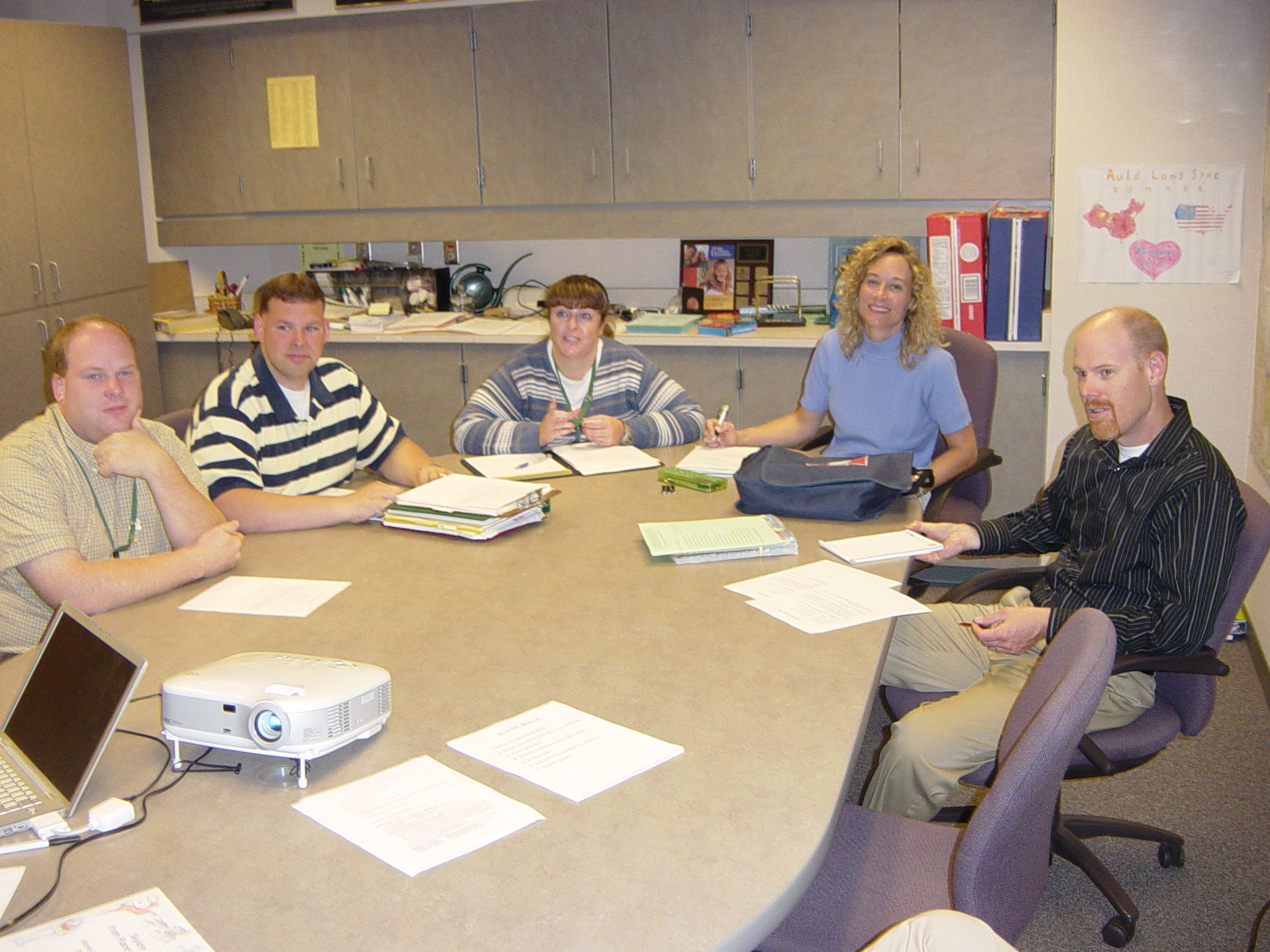
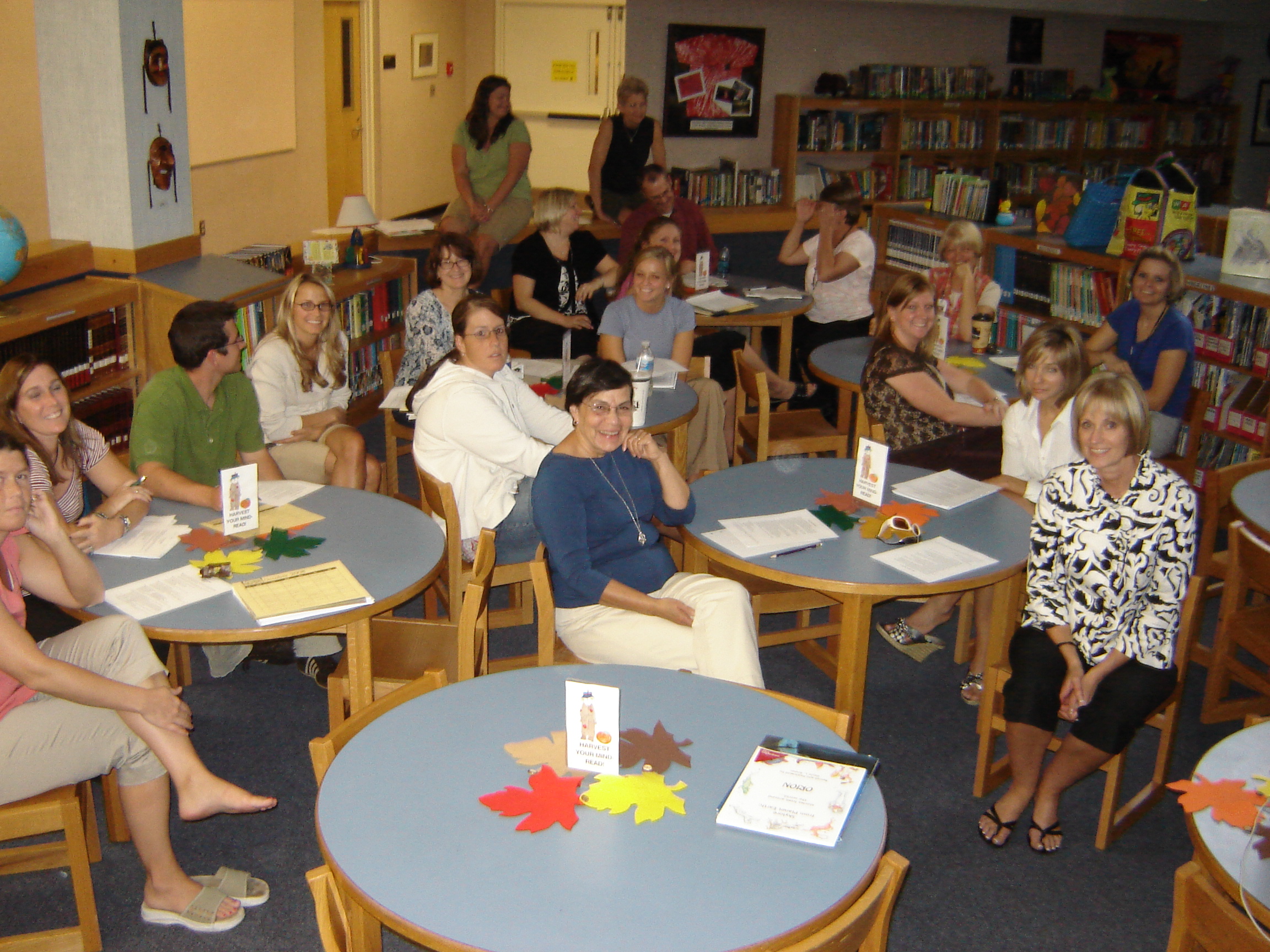
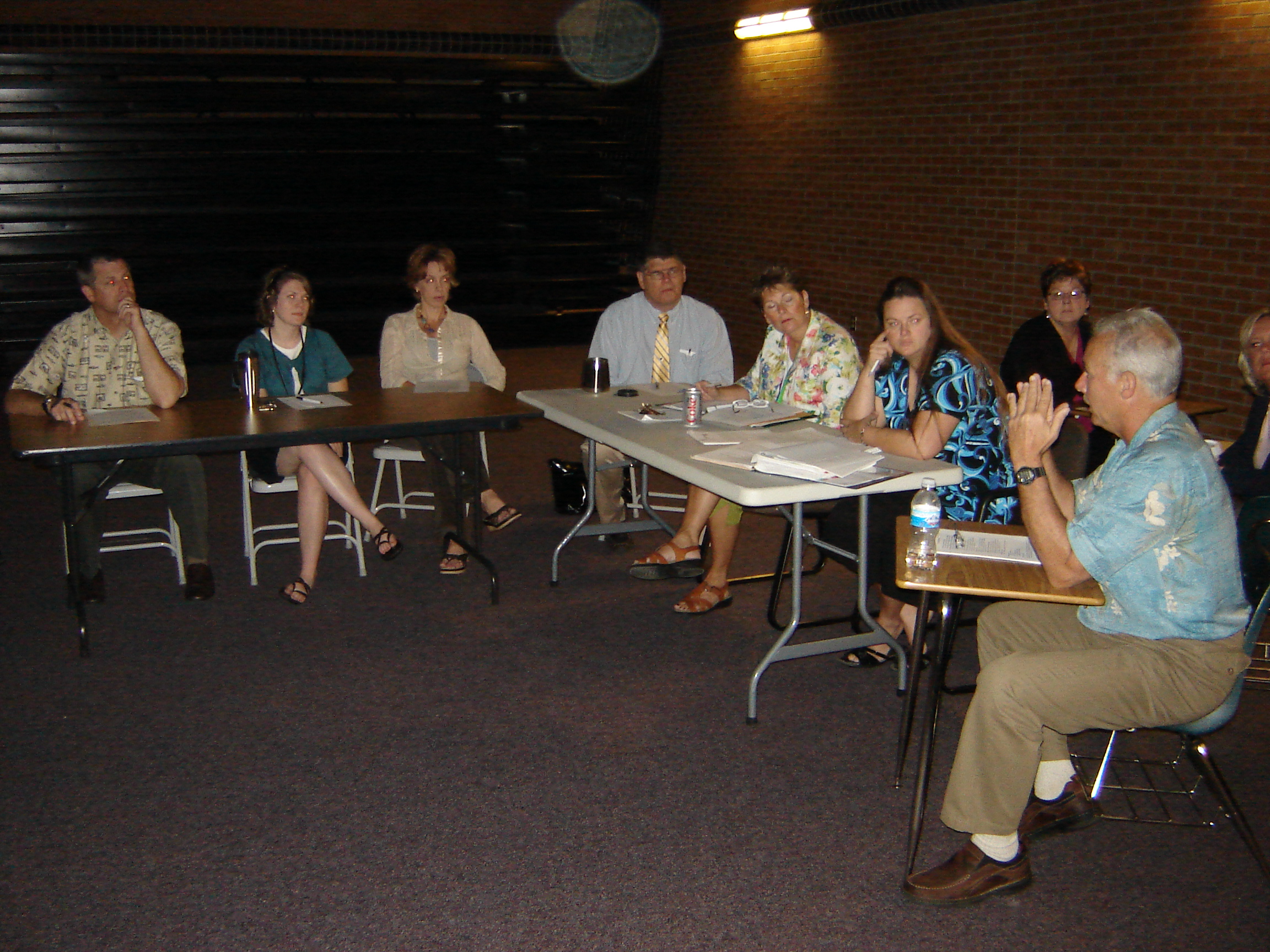
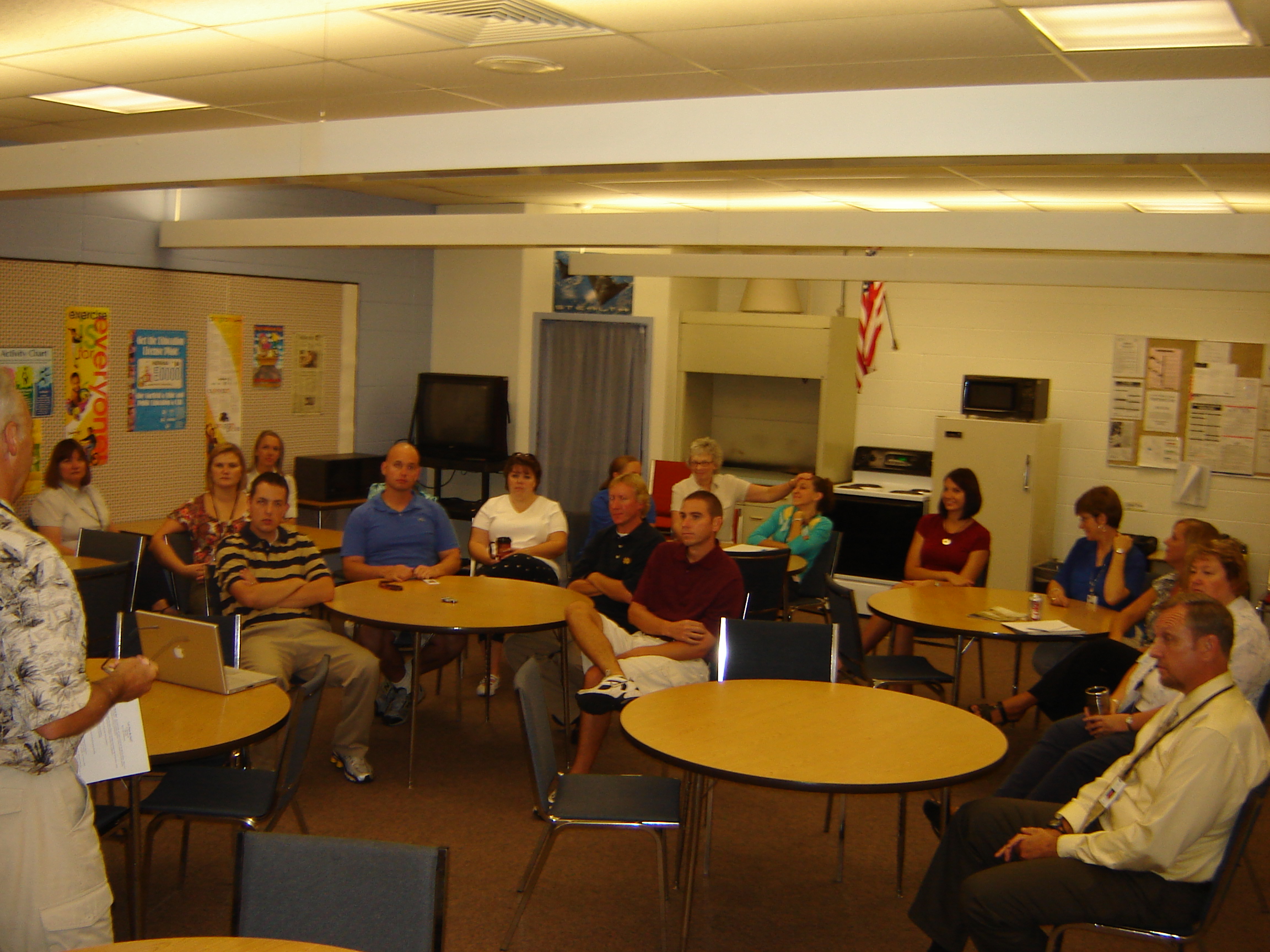
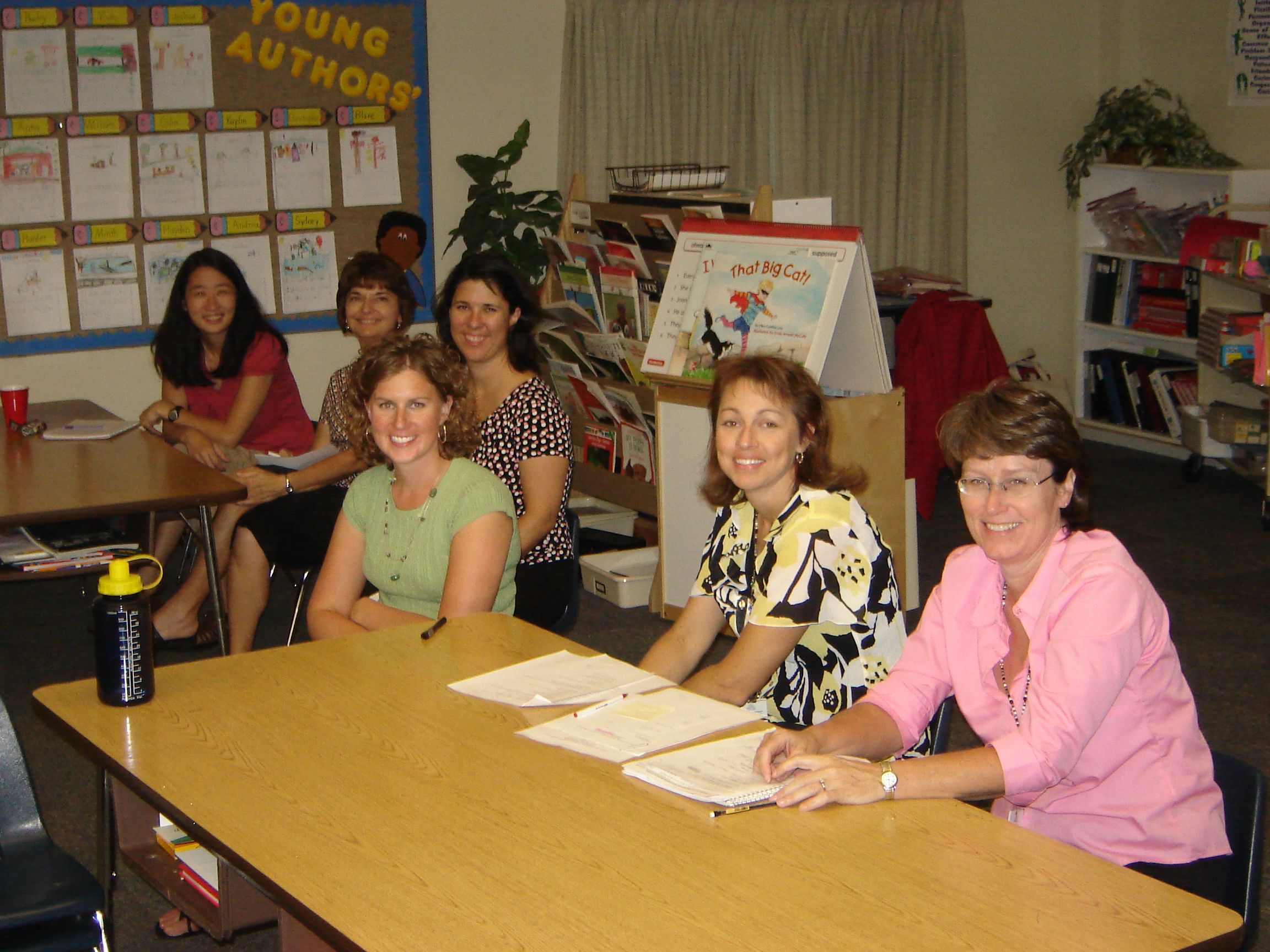
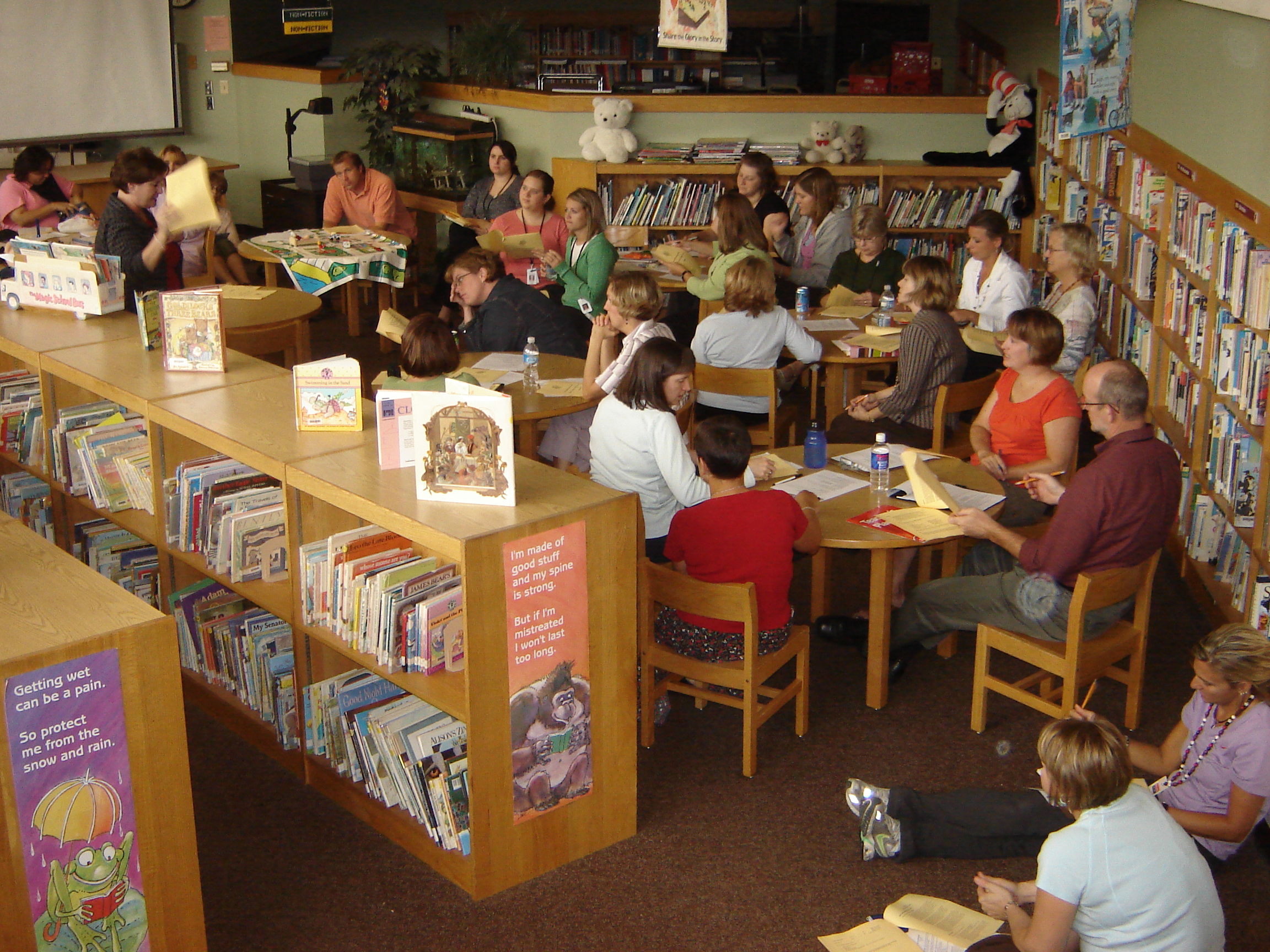
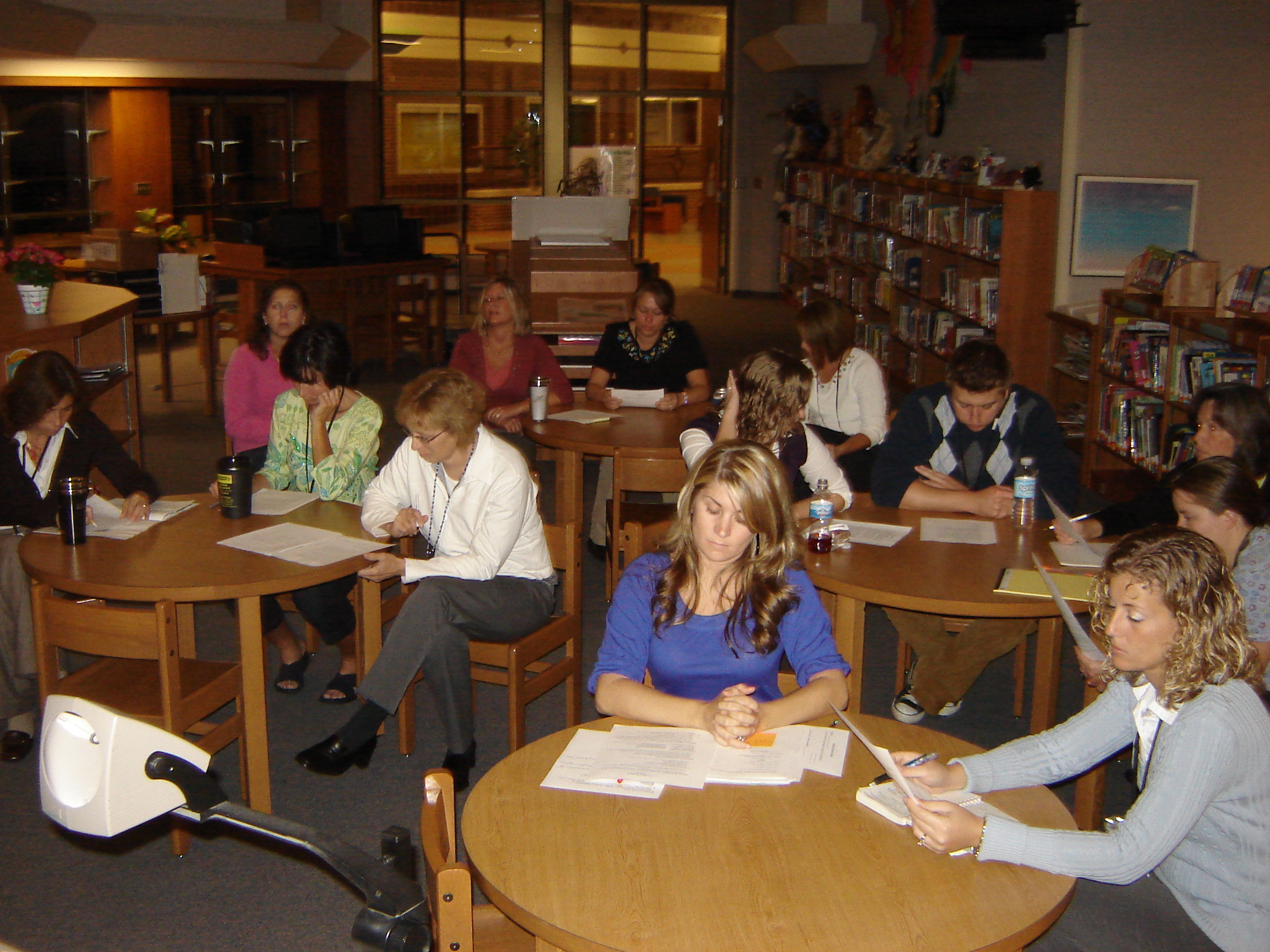
The Let There Be Night project team of Art Klinger and Chuck Bueter met with the staff of each school for two in-service opportuinites in 2008. The first meeting (below left) introduced outdoor lighting issues and the Let There Be Night program. The second meeting (below right) addressed the nuts and bolts of the program and how teachers can interweave it into their classrooms. Click the date for images of the first round of staff meetings.
|
|
A group of PHM teachers chose Let There Be Night for their professional development meeting on October 15, 2008. Teachers from middle- and elementary-schools met for additional PBA Day instruction on November 13, 2008. We thank them (photo 1, photo 2) for dedicating their professional development time to the LTBN initiative.